
Feeding Therapy
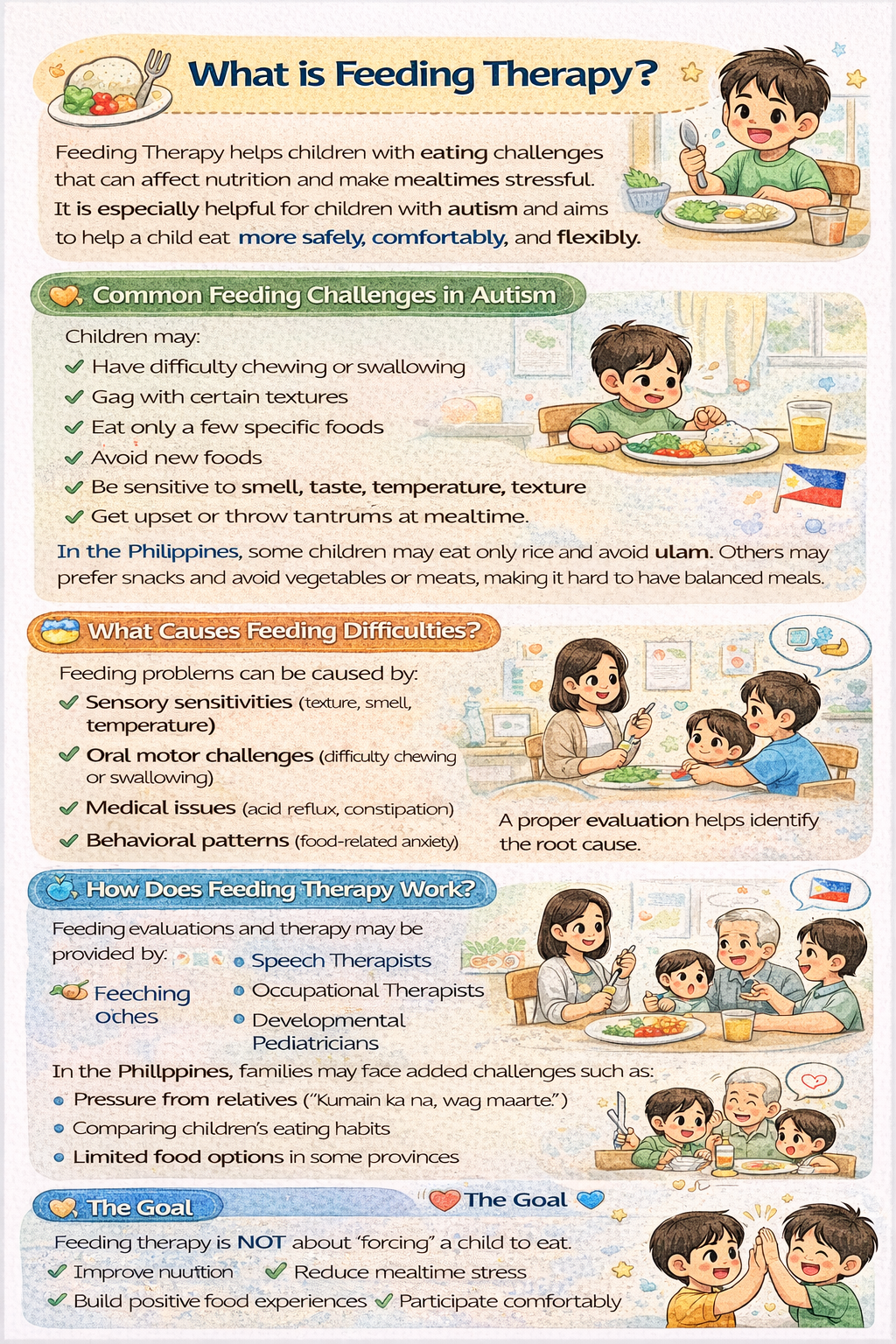
Feeding Therapy helps children who have serious difficulty with eating. While many kids go through a normal “picky eater” phase, feeding therapy is recommended when a child eats very few foods, refuses entire food groups, gags easily, has trouble chewing or swallowing, loses weight, or becomes extremely upset at mealtime.
For children with autism, feeding challenges are often related to texture, smell, or temperature. For example, some children may eat only plain rice and refuse ulam, avoid vegetables completely, or reject mixed foods like sopas or sinigang. Feeding therapy focuses on slowly and safely helping children become more comfortable with different foods — not forcing them to eat.
In the Philippines, feeding therapy may be offered in therapy centers, hospitals, or developmental pediatric clinics. Because access can vary, parents play a big role at home. Helpful tips include offering small amounts of new food beside familiar food, keeping mealtimes calm, avoiding pressure or shaming, and celebrating small progress. If mealtimes are consistently stressful or your child’s nutrition and growth are affected, it may be more than “picky eater lang.” Speaking with a pediatrician or therapist can help guide the next steps. 💙