
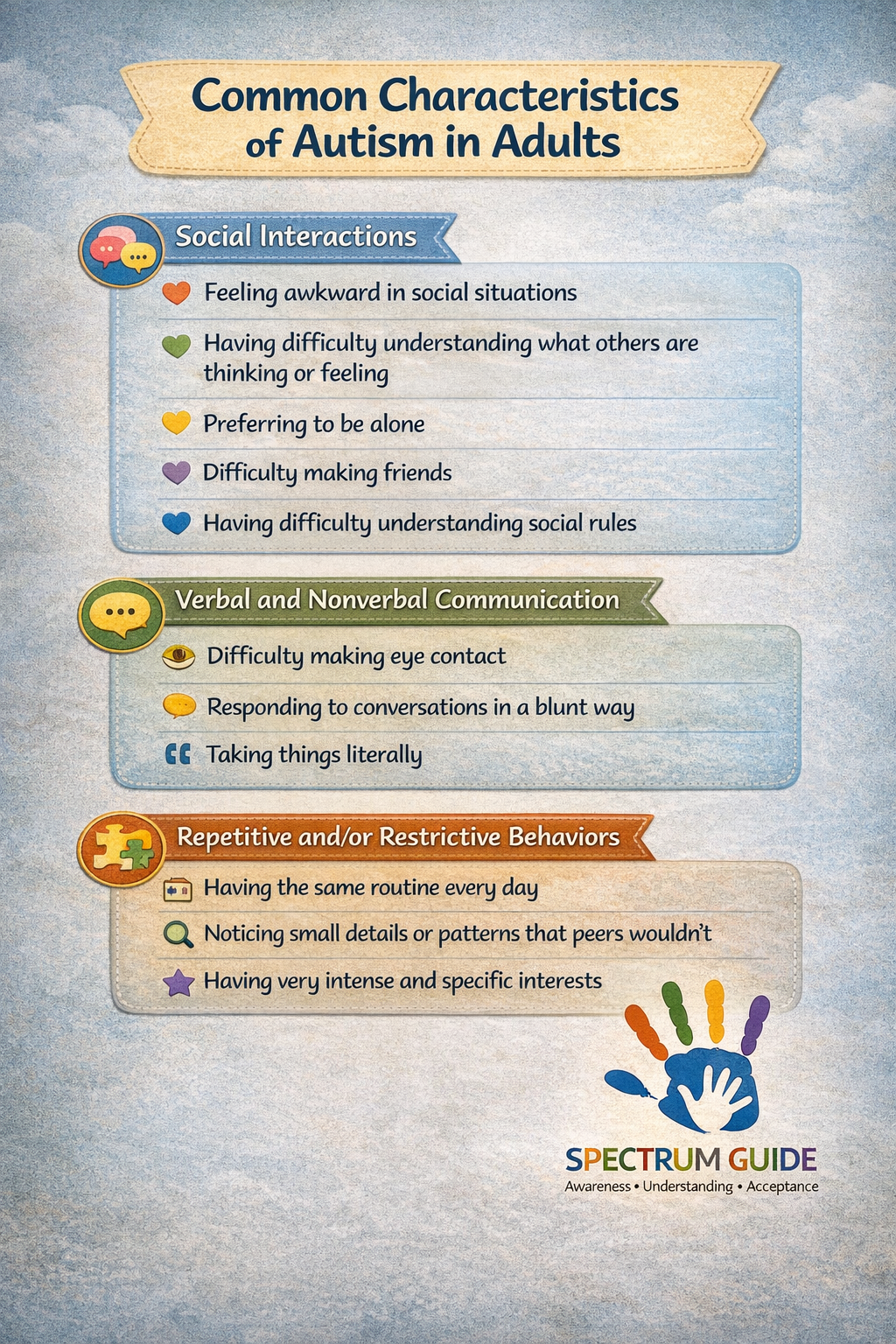
Signs of Autism in Adults
Autism in adults often shows up as differences in social communication and patterns of repetitive or focused behaviors. These traits may have been present since childhood but were not recognized at the time. Below, you will find common signs that may help you better understand yourself or someone you care about.
Many autistic adults learn to “mask” their traits. Masking means hiding or adjusting natural behaviors in order to fit in socially. In Filipino culture, where pakikisama (getting along with others) and avoiding hiya (embarrassment or shame) are often valued, some individuals may feel strong pressure to appear “normal,” polite, or socially comfortable—even when they feel overwhelmed inside.
Masking can happen without a person realizing it. It may look like copying how others speak or act, forcing eye contact even when it feels uncomfortable, or hiding repetitive movements by replacing them with more subtle behaviors (such as tapping a pen or using a small fidget). Some adults create a “social version” of themselves to blend in at work, school, church, or family gatherings.
While masking can help someone navigate social situations, it can also be exhausting over time. Understanding these patterns can be an important step toward self-awareness, self-acceptance, and finding supportive environments.