
Signs of Autism in Women and Girls
Autism in women and girls can look different from autism in boys and men. Because the signs are often more subtle, many girls are diagnosed later in life—or not at all. Some may first be misdiagnosed with anxiety or depression.
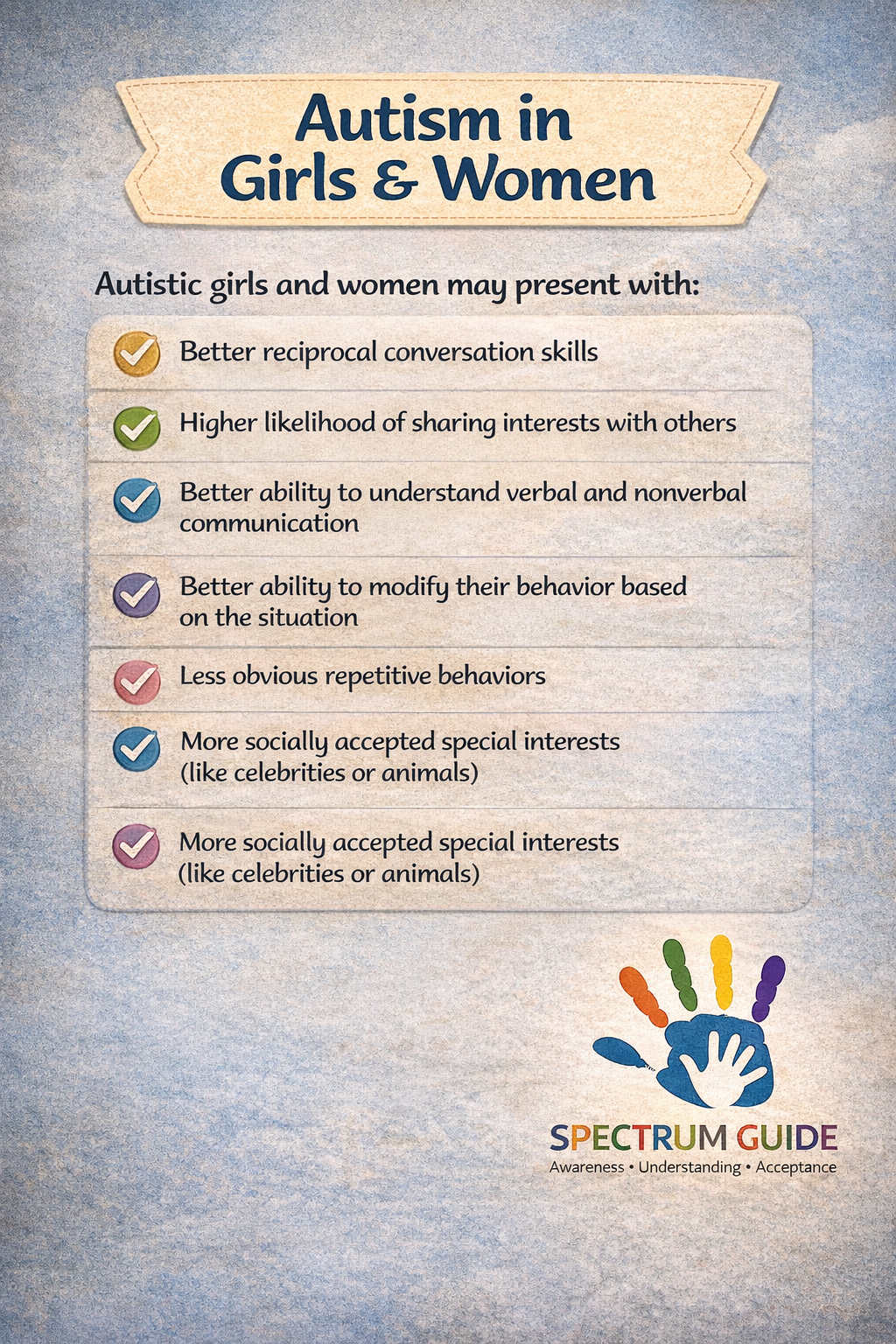
Girls may appear socially capable but still struggle internally. They may be better at holding conversations, sharing interests, or copying others to blend in. Their special interests may seem socially acceptable, such as celebrities, animals, books, or art. Because repetitive behaviors may be less obvious, their differences are sometimes overlooked.
In Filipino culture, values like pakikisama (getting along with others) and avoiding hiya (embarrassment) can add pressure on girls to behave in socially expected ways. Many learn to “mask” or hide their struggles by forcing eye contact, rehearsing conversations, or copying others’ behavior.
Masking can be exhausting and may lead to stress or delayed diagnosis. Greater awareness can help families and communities better understand and support women and girls on the spectrum.